Drupal or WordPress: which website management system to choose?


When the task is to create a website, the first question that arises is on which platform to implement it. And in most cases, the choice narrows down to the two most popular systems: WordPress and Drupal. Both platforms are open, actively developing, have communities, plugins and thousands of implemented projects. But these CMSs are based on completely different philosophies. To make the right choice, you need to understand how they differ, who is suitable for which and what affects the success of the implementation. In this article, we provide an objective comparison, without marketing slogans, in simple words.
Simplicity or control: the difference in approaches
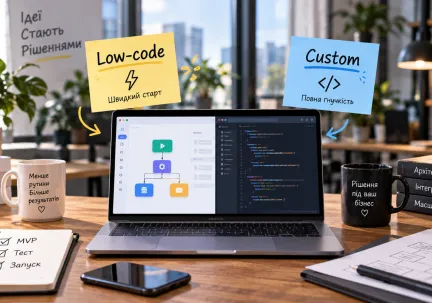
WordPress is a system that is positioned as a solution “for everyone”. It is ideal for blogs, business cards, landing pages, as well as small business sites where functionality is limited by standard plugins. A simple interface, a huge number of templates, and the ability to quickly launch are its strengths. But this comfort comes at a price: when you need to implement something more complex, you have to modify the system “through the knee”. Plugins often conflict, security depends on third-party developers, and scalability is limited by the technical architecture.
Drupal, on the contrary, requires more attention at the start, but opens up much wider possibilities for customization, security, content structure and control over all elements of the site. This is a platform not “for everyone”, but for those who know what they want. Drupal is built as a constructor of modules, content types, relationships, filters, roles. Each element is configurable, changeable, scalable. This allows you to create multi-level platforms: from eCommerce with dozens of categories and filters to educational portals, government systems, intranets, CRM. If the site grows in the future, Drupal will allow you to do this painlessly. WordPress is great for a fixed structure where nothing changes. But when you need to move, add logic, integrate API, CRM, specific functions, its flexibility is quickly exhausted.
Security: a critical factor for serious sites
In Drupal, security is built into the philosophy. Access rights, user separation, protection against SQL injections, regular updates, centralized module management — all this is under the control of the core team. That is why Drupal is chosen by government sites, large banks, and educational institutions. WordPress, due to its popularity, often becomes a target for attacks. Many plugins are created by third-party developers without proper auditing, and automatic updates sometimes lead to conflicts. If security is critical — Drupal is a few steps ahead here.
Both CMSs allow you to promote your site in search engines. But Drupal has higher manageability: the SEO structure is formed manually, URLs are logical, duplicates are eliminated systematically, the sitemap is fully controlled. In addition, Drupal works better with large volumes of content without losing speed. WordPress has thousands of SEO plugins, but the real effect often depends on their compatibility and high-quality configuration. As for speed, Drupal is more difficult to configure, but it is flexibly cached and does not lose performance when expanding functions. WordPress often requires additional optimizers, especially under heavy load.
GL.ua recommends Drupal
Drupal gives its maximum only in the hands of a team that deeply knows its architecture. This is how GL.ua works — a Ukrainian company that has specialized exclusively in Drupal since 2008. The team does not just “make websites,” but implements full-fledged digital solutions: eCommerce, platforms, corporate systems, CRM, dropshipping, educational portals. In projects, Glyanets embodies the customer’s business logic, ensures scalability, security, SEO-readiness, and technical support for years to come.
Using only Drupal, the team provides the highest level of expertise, avoids compromises, and builds systems that really work. If you are in doubt between WordPress and Drupal, and your goal is a long-term, reliable, and functional website — GL.ua will help you implement it on Drupal, qualitatively, comprehensively, and within the framework of your business request.
Just one step to your perfect website